Teaching, Treating, and Bearing Witness in Tegucigalpa
It All Begins Here
By Lawrence Robbins, M.D.
(Patient details have been changed to protect privacy.)
In early August 2018, we began the groundwork for something long overdue: a headache education program in Tegucigalpa, Honduras’ capital city. The goal is simple but powerful—teach Honduran physicians how to diagnose and treat migraine and other headache disorders, so that care continues long after we leave.
The program will be based at the public teaching hospital, where Dr. Sofía Dubón, an exceptional neurologist and epilepsy specialist, is launching a small headache clinic. I’ll support her as it gets off the ground. If successful, this effort will help countless patients for years to come.
Familiar Faces, Real Impact
One of the first patients I saw was a woman I had treated months earlier. In March, she had stumbled into the clinic post-seizure after experiencing one on the bus—one of 20 seizures a month. We switched her to a medication we bring with us, and by August her seizures were down to about one per month.
She told me she planned to bring me a gift: one of her mountain chickens.
After several bus transfers, she arrived proudly carrying a large bag. I quietly told our interpreter I had no idea what to do with a chicken—especially on a plane home.
Inside the bag? Cucumbers from her garden.
Relief all around.
Children and Neurology: The Hardest Cases
I saw multiple children with severe neurological conditions—many the result of birth injuries, which are tragically common due to limited prenatal care and restricted access to emergency C-sections.
Two children with severe seizure disorders were essentially non-verbal and immobile. Their mothers were deeply devoted. One refused a cheaper medication and said simply, “Give him the best.” The family spends half their income on his medication.
A 10-year-old girl with seizures, ADHD, and learning disabilities stemming from oxygen deprivation at birth cannot afford medication. We supplied what we could, but support services and tutoring are extremely limited.
A 14-year-old boy experiencing two to three seizures a day had no access to medication at all. We provided Keppra, which we supply and which does not require blood tests—often an insurmountable barrier here.
Each uncontrolled seizure costs brain cells. Over time, you can see it in patients’ faces—the blankness, the dulling. It’s devastating.
The Reality of Limited Resources
Much of my work here is a constant balancing act: what is medically ideal versus what is possible.
Blood tests are expensive. Imaging is often unavailable. Many newer medications are out of reach unless we bring them ourselves.
I saw:
Patients with epilepsy who have been on older medications like Dilantin or phenobarbital for decades—medications with serious long-term side effects.
A man with Parkinson’s disease placed on the wrong medication entirely, likely due to limited options.
A woman with migraines taking a dangerous drug given her severe hypertension—treatment choices shaped by cost, not safety.
We do what we can: toothbrushes to combat medication side effects, multivitamins when affordable, careful medication choices that avoid the need for ongoing lab monitoring.
Mental Health Without a Safety Net
Mental health care is particularly fragile here.
I met:
A young man with untreated bipolar disorder and likely schizoaffective illness, dependent on a family overwhelmed by managing complex medications.
A 39-year-old woman with frontotemporal dementia, devastating at her age, cared for entirely by her sister.
A teenage boy with years of suicidal ideation, aggression, and emotional disconnection—his family terrified and exhausted.
There are few institutional supports. Families simply absorb the care.
Beyond the Clinic
Next door to the clinic is an orphanage. We spent time with the children there—resilient, affectionate, and startlingly self-sufficient. I watched them resolve conflicts without adults intervening.
The playground felt like something out of the 1960s—rough, imperfect, a little dangerous. It made me realize how protected children are in the U.S. This orphanage, despite limited resources, offers one of the safest environments many of these children will ever know.
We also watched groundskeepers cutting grass with machetes, teaching older kids alongside them. It’s cheaper than a lawnmower—and it works.
Why This Work Matters
Over and over, I am struck by the resilience of the Honduran people—especially women who have raised many children, sometimes losing one or two along the way, yet continue forward with strength and dignity.
This work isn’t just about treating headaches or seizures. It’s about building capacity, sharing knowledge, and offering continuity where there is often none.
Dr. Dubón and I trade patients, notes, and handwriting—hers legible, mine classic doctor scribble. We make it work.
Until next time…
Adiós.
— Larry R.
From One Patient to a Lifeline: Building a Neurology Clinic in Rural Honduras
It All Begins Here
In 2017, we started small: one patient, one chart, and me, working out of a borrowed office. I had no grand plan to build a large clinic—but once patients began arriving, I couldn’t turn them away.
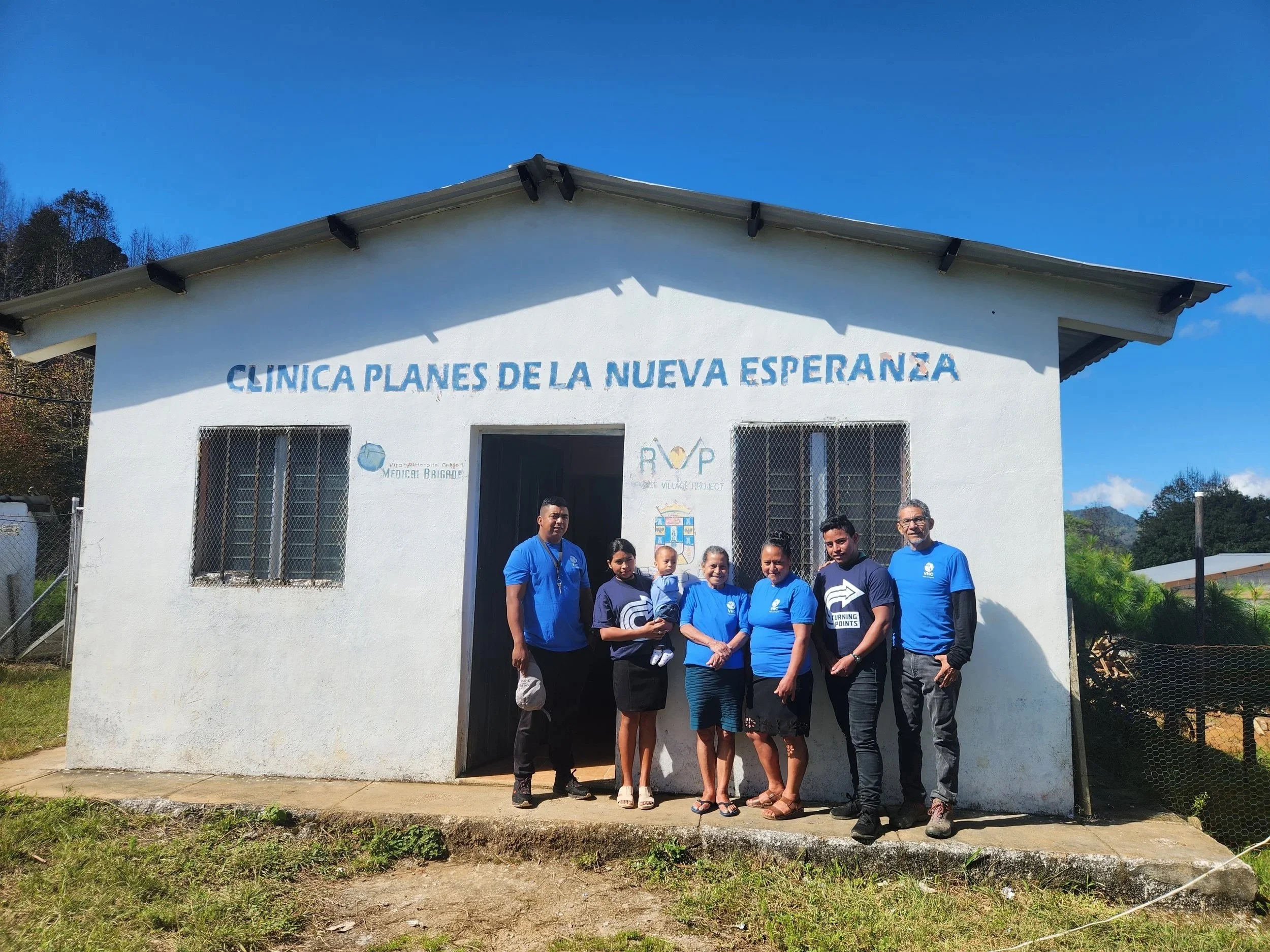
Today, that small effort has grown into a busy rural neurology and psychiatry clinic—too busy, really. Along the way, we added infrastructure as needs became impossible to ignore: a built-out clinic space, a nurse administrator, a small pharmacy, portable EEG capability, basic labs, two Honduran neurologists and two psychiatrists, and a steady supply of medications.
All services are completely free to patients.
Where We Are — and How We Got Here
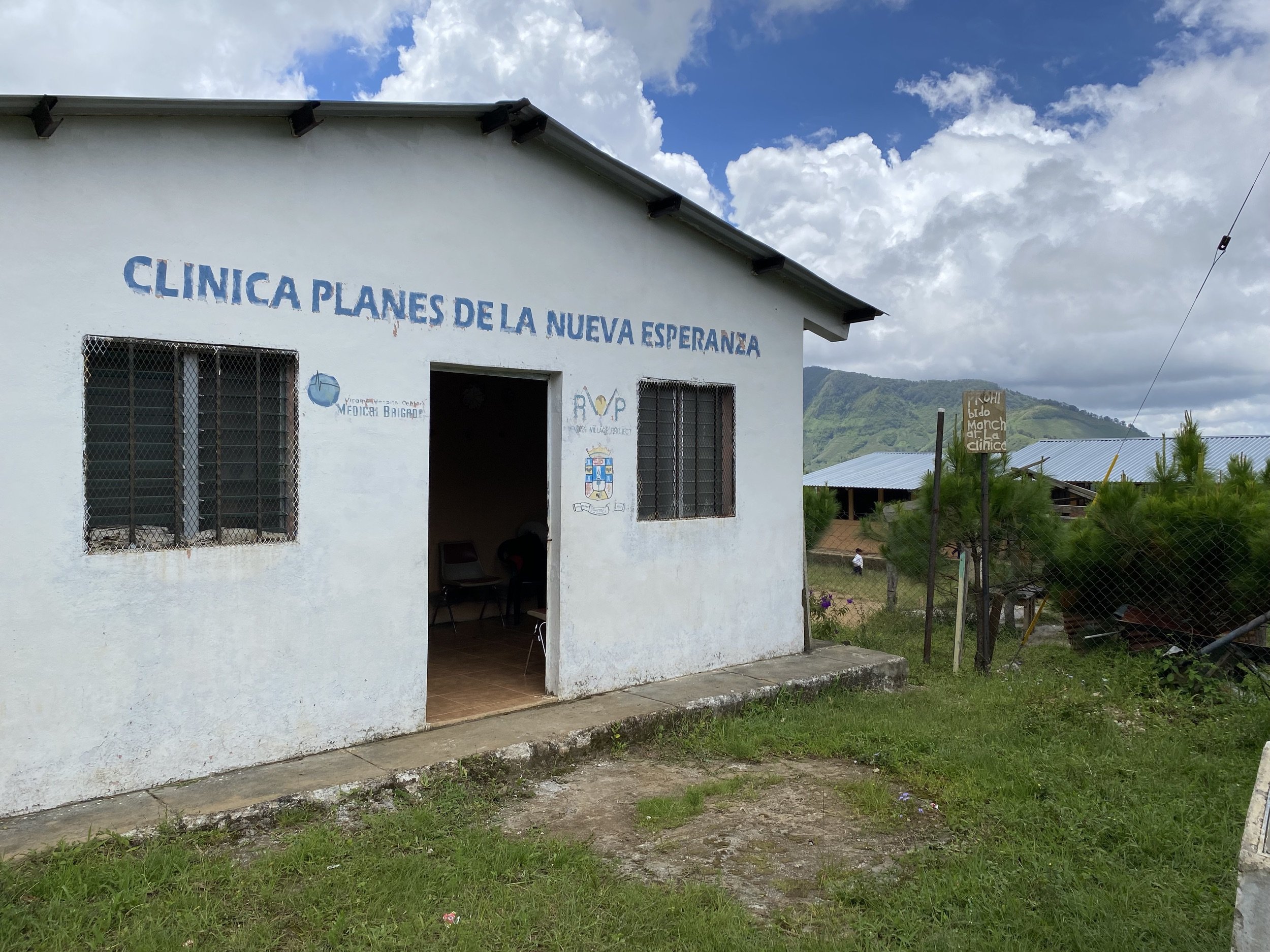
Our clinic is located in a rural region, approximately 1 hour and 20 minutes from Tegucigalpa, Honduras’ capital. We operate within a well-run general medical clinic that provides invaluable support. Patients find us primarily through word of mouth, coordination with surrounding clinics, and limited radio outreach.
We are affiliated with SOCIEDAD AMIGOS DE LOS NIÑOS, a remarkable organization that provides essential logistical and operational support.
At this point, we are the second-busiest provider of neurology and psychiatry services in Honduras.
Funding and Sustainability
Because everything is free—doctor visits, EEGs, labs, medications—funding is a constant concern. I raise money continuously and supplement costs personally. Medications alone are brought in by the hundreds of thousands of tablets at a time, typically every three months.
We are actively seeking a partner to help manage the clinic, with the hope of expanding services to include consistent psychotherapy and physical therapy, both of which are extremely limited in Honduras.
New and Expanding Projects
Prenatal Vitamins
We distribute prenatal vitamins to women living in remote mountain regions who have no financial or transportation access to them. To date, we’ve distributed nearly 100,000 vitamins, with a goal of 450,000 or more, targeting at least 30,000 per month.
Telemedicine
Due to ongoing road construction and difficult travel conditions, we are expanding televisits, both from our clinic and from my office in the Chicago area.
Clean Water Filters
We help install water filtration systems in family homes in impoverished mountain areas. Each filter provides clean water for 5–7 years, transforming unsafe water into a reliable source of drinking water.
Training Other Physicians
In November 2024, I gave a webinar to the American Academy of Neurology on building sustainable neurology programs in underserved regions. We hope to spark broader interest in Neurology in Central America and encourage similar initiatives.
Our Goals
Provide free neurologic and psychiatric care, including medications and labs
Teach medical students, residents, and attending physicians
Publish headache treatment guidelines in Spanish
Train neurologists in headache medicine and establish Honduras’ first headache center
Continue upgrading clinic infrastructure
Support other clinicians interested in starting similar programs
Research, Teaching, and Publishing
We recently published a patient survey study in World Neurology, and there is strong potential for further research through the clinic. I’ve published multiple Spanish-language clinical guides and have a 4th edition of my book, Clinical Pearls, coming out in Spanish—copies of which will be distributed free to Honduran physicians.
I also teach neurology residents at the Public Hospital in Tegucigalpa, which is crowded, under-resourced, and full of dedicated clinicians doing the best they can under difficult conditions.
Staff and Daily Operations
We are fortunate to work with four deeply committed young physicians—two neurologists and two psychiatrists—who could earn comparable salaries in the city but choose to serve here. Our nurse administrator is indispensable. We also rely on interpreters and two pharmacy staff members who manage an enormous medication refill volume.
The clinic operates alongside a small 24/7 emergency department that handles everything from strokes to status epilepticus with limited equipment.
Practicing Medicine in Honduras
Clinical care here is refreshingly direct: doctor and patient, minimal paperwork, no insurance barriers, and very little bureaucracy. Charts are simple. Multiple physicians often follow the same patient, and we emphasize continuity and future planning.
Cultural differences matter. Patients are stoic, family bonds are strong, psychotherapy carries stigma, and side effects are often underreported unless severe. Despite enormous challenges, families care for one another with remarkable devotion.
Why Patients Come Back
Our published survey revealed something unexpected: free medications were not the primary reason patients returned. More important were the relationships, the diagnoses, and being taken seriously.
That—more than anything—is what sustains this clinic.
Looking Ahead
We hope to:
Reestablish psychotherapy services
Expand physical therapy access
Open a dedicated headache clinic in Tegucigalpa
Continue vitamin and clean water programs
Find a long-term partner to help sustain and eventually lead the clinic
If you’re interested in learning more or supporting this work, I can be reached at
lrobb98@icloud.com
— Larry Robbins, M.D.